

Pest library · Halyomorpha halys
Stink Bug Control in Delaware
Brown marmorated stink bugs do not breed indoors. They move into walls and attics each fall and reappear on the first warm days of late winter.
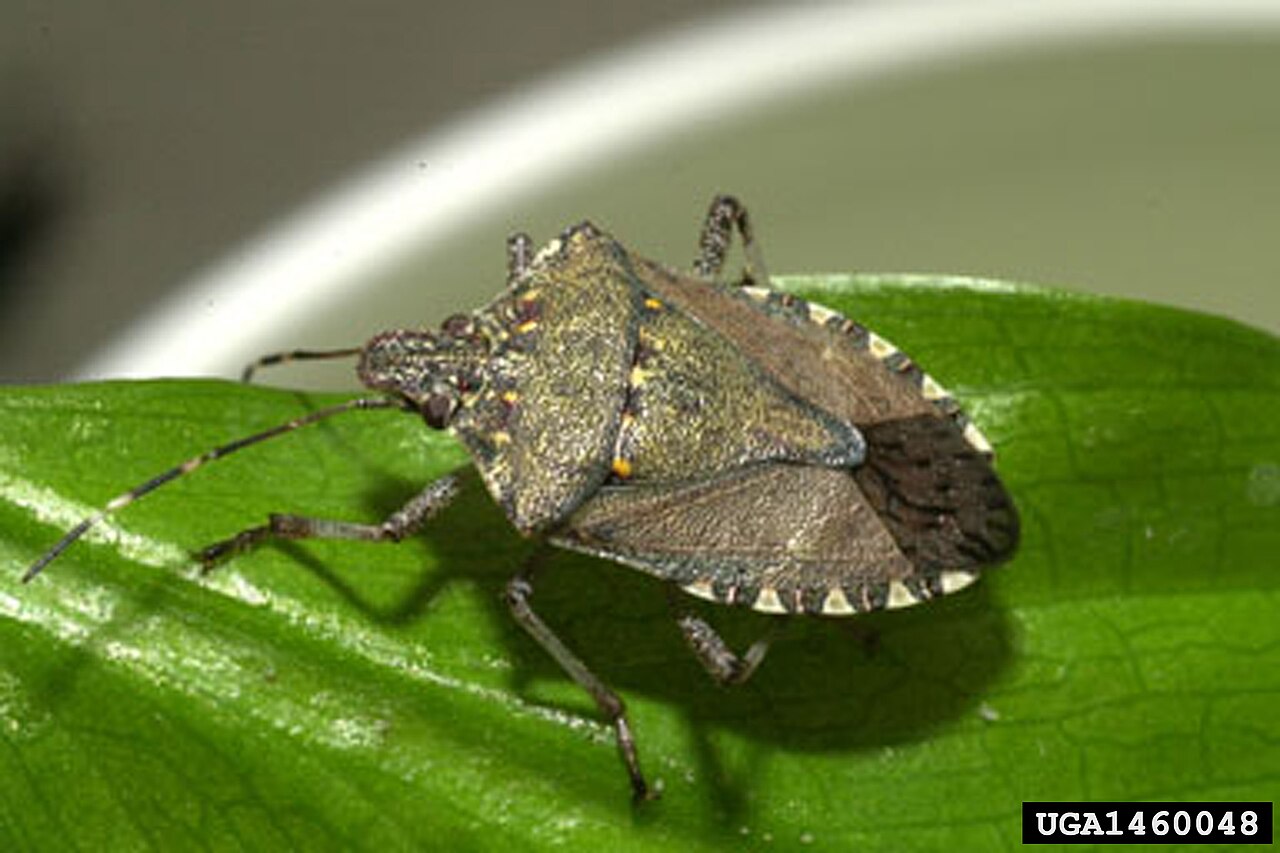
What brown marmorated stink bugs look like
The brown marmorated stink bug is a shield-shaped insect about five eighths of an inch long, nearly as wide as it is long, in mottled gray-brown. Marmorated means marbled, and that mottling is the first clue. Adults hold their wings flat over the back and move slowly enough to be examined.
Two marks separate it from every native shield bug in Delaware, and both are visible without magnification:
- White bands on the antennae — two pale rings near the tip of each antenna against dark segments
- Alternating dark and light edging on the abdomen — the abdomen extends past the folded wings and is banded like a small checkered rim
- Smooth shoulders — the front edge of the pronotum is rounded, without the forward-pointing spines native brown stink bugs carry
Nymphs look different enough to confuse people. Early instars are rounded and dark with orange-red markings and spiny edges, usually clustered on a leaf or trunk. Later nymphs turn mottled and start showing the antennal bands.
The smell is real. Glands on the underside release a cilantro-and-burnt-rubber odor when the insect is crushed, alarmed or vacuumed roughly. It is harmless, but it lingers on fabric and fingers.
How they get in
Brown marmorated stink bugs are not breeding in your house. They enter in fall looking for a dry, sheltered place to spend the winter, the same behavior they use on cliff faces and dead trees. A house reads as an unusually good cliff.
Movement starts on warm afternoons in September. They land on sun-warmed walls, with the south and west sides hit hardest, walk upward and probe every seam they meet. They are flat, persistent, and need very little clearance.
- Gaps around window and door frames where old caulk has pulled away
- Behind and above window-mounted air conditioners
- Attic gable and ridge vents, and soffit vents with damaged screening
- The roofline where fascia meets soffit, and under loose siding or trim
- Utility penetrations for cable, dryer vents, hose bibs and electrical service
- Chimney chases and gaps around recessed lights in insulated ceilings
Once inside they settle into wall voids, attics and soffits and go quiet. What you see in January is not a new invasion; it is insects already in the structure waking on a mild day and walking toward light. That is why they appear on the inside of windows in February.
What they do
Indoors, nothing. They do not bite, sting, feed, breed indoors, damage wood or fabric, or carry disease. They are a nuisance, and a loud, clumsy, smelly one, but a nuisance.
Outdoors is a different matter. Brown marmorated stink bug is a serious agricultural pest with an unusually broad diet, feeding on tree fruit, sweet corn, soybeans, peppers, tomatoes and ornamentals. Feeding leaves corky sunken damage in fruit and stippled distortion on vegetables. That matters through the grain and produce ground around Felton and Harrington, and to anyone with a home garden.
Dead stink bugs accumulating in wall voids and attics can attract carpet beetles and other scavengers over time. Clearing what is accessible is worth doing. That is the only secondary problem they reliably cause indoors.
When you see them in Delaware
The Mid-Atlantic gets two distinct pulses, predictable enough to plan around.
Fall, roughly mid-September through late October. The first cool nights trigger movement to overwintering sites, and warm sunny afternoons after a cold snap produce the heaviest wall landings. This is the window where exclusion pays. Once they are in the wall, the options narrow.
Late winter into spring, February through April. Warm spells wake them inside heated walls and attics. They move toward light and warmth, which usually means into living space rather than back outside. Expect them on windows, ceilings and lampshades on the first mild days.
Through summer they are outside feeding and breeding, laying barrel-shaped egg masses of about two dozen on the undersides of leaves. Numbers vary year to year, and a mild winter followed by a dry summer generally means a heavier fall.
Brown marmorated vs native stink bugs, boxelder bugs and kudzu bugs
Four insects get called stink bugs in Delaware, and only one behaves the way people expect.
Native brown stink bug
Euschistus species are similar in size and color but lack the antennal bands, have pointed forward-projecting shoulders on the pronotum, and are plain brown rather than marbled. They are field insects and do not overwinter in houses in numbers. Finding one indoors is incidental.
Boxelder bug
About half an inch, narrow and flat, black with three bright red-orange lines on the pronotum and red wing veins forming a rough X on the back. Not shield shaped, and unmistakable once you see the red. Boxelder bugs overwinter indoors exactly like stink bugs and cluster on sunny walls the same way, so the handling is identical even though the insect is not.
Kudzu bug
Much smaller at about an eighth of an inch, olive-green to brown, and oblong rather than shield shaped. Kudzu bugs also aggregate on light-colored walls in fall. They are more associated with the Southeast and turn up here irregularly, usually near soybean ground.
None of the four need different indoor handling. They all overwinter, none breed inside, and all are removed the same way. The identification matters mainly for what is happening in the yard.
How to keep them out
Exclusion is the only approach that changes next year's numbers, and it has to happen before they arrive. Late August through mid-September is the window in Delaware.
- Caulk gaps around window frames, door frames, trim and where siding meets the foundation
- Repair torn window and door screens and worn weatherstripping
- Screen attic gable vents, ridge vents and soffit vents with fine mesh
- Seal around dryer vents, cable and electrical penetrations and hose bibs
- Remove window air conditioners for the season, or seal the gaps around them
- Fit tight door sweeps, including on the garage
- Check the roofline where fascia, soffit and gutter meet; it is the most missed route on two-story homes
The same sealing work keeps out overwintering wasp queens, cluster flies, lady beetles and mice, so it is rarely wasted effort.
How we treat stink bugs
Why vacuuming beats spraying indoors
Once stink bugs are inside a wall, no interior spray reaches them, and applying one is a poor trade. Residual products on indoor surfaces do not work fast enough to prevent the odor, do not reach the void holding most of the population, and leave carcasses that feed scavenging insects. Interior fogging is worse: it does not penetrate voids at all and spreads residue across living space for no benefit.
A vacuum solves the indoor problem directly. Use a shop vacuum or a dedicated bag, work gently to limit odor release, and empty it outside immediately. A stocking rubber-banded into the wand and tied off makes disposal cleaner. This is not a lesser fix, it is the correct one for insects already in living space.
What we do
We inspect the exterior first: sun-exposed walls, roofline, vents, window and door frames, utility penetrations. Identification comes next, since boxelder bugs and native stink bugs get lumped in. Where a treatment is appropriate it is a targeted exterior application to landing and entry surfaces, timed to the fall movement rather than broadcast indoors. Timing decides whether it does anything at all; the same application in November is close to pointless.
The rest is exclusion. We document the gaps, seal what is accessible, and set out what needs a contractor or a homeowner afternoon. Late-winter follow-up checks whether anything is emerging inside and whether the fall work held. Stink bugs are worked as part of a general pest control program rather than as a one-off, so if you want the exterior assessed before the fall push, get in touch in late summer.
Stink Bugs FAQs
Do stink bugs bite?
No. Brown marmorated stink bugs have mouthparts built for piercing plants, not skin, and they do not bite or sting people. They also do not feed, breed or cause damage indoors. The only real complaint is the odor released when they are crushed or handled roughly.
Why are stink bugs in my house in winter?
They entered the previous fall and settled into wall voids, attics and soffits to overwinter. When a warm spell raises the temperature inside those spaces, they wake and move toward light, which usually means into living space. They are not a new invasion and they are not breeding in the walls.
Does spraying inside get rid of stink bugs?
Not effectively. Interior sprays and foggers do not reach the wall voids where most of the population sits, and insects killed inside a void leave carcasses that attract scavenging beetles. Vacuuming what appears in living space and sealing the exterior in late summer is a far better use of effort.
How do I get rid of stink bugs without the smell?
Vacuum them gently rather than crushing or swatting them. A shop vacuum or a dedicated bag works well, and emptying it outside immediately keeps the odor out of the house. A stocking secured inside the wand lets you tie off and discard the catch without opening the canister.
When should I seal my house against stink bugs?
Late August through mid-September in Delaware, before the first cool nights push them onto walls. Sealing after they have already moved in traps them in the structure rather than keeping them out. Focus on window and door frames, vents, the roofline and utility penetrations.
How do you tell a stink bug from a boxelder bug?
A brown marmorated stink bug is shield shaped, mottled gray-brown, with white bands near the tips of the antennae. A boxelder bug is narrow and flat black with three bright red-orange lines behind the head and red wing veins forming an X. Both overwinter indoors and both are handled the same way.
Do stink bugs damage anything?
Not inside the house. Outdoors they are a significant agricultural pest, feeding on tree fruit, soybeans, sweet corn, peppers, tomatoes and ornamentals, and their feeding leaves corky sunken spots in fruit. Indoors they are strictly a nuisance.
Where we treat
Stink Bugs control across Delaware
- Claymont, DE
- Hockessin, DE
- Wilmington, DE
- Newark, DE
- New Castle, DE
- Bear, DE
- Delaware City, DE
- Odessa, DE
- Middletown, DE
- Townsend, DE
- Smyrna, DE
- Clayton, DE
- Kenton, DE
- Cheswold, DE
- Hartly, DE
- Little Creek, DE
- Dover, DE
- Wyoming, DE
- Camden, DE
- Marydel, DE
- Magnolia, DE
- Viola, DE
- Frederica, DE
- Felton, DE
- Harrington, DE
- Milford, DE
- Houston, DE
- Lincoln, DE
- Greenwood, DE
- Ellendale, DE
- Bridgeville, DE
- Seaford, DE
- Bethel, DE
- Laurel, DE
- Delmar, DE
Get on the schedule
Dealing with stink bugs?
Send a photo and a few details. Correct identification is free and it changes the treatment.