

Pest library · Gryllidae
Cricket Control in Delaware
Crickets are mostly a nuisance, but they chew fabric and paper and the chirping wears thin. The humpbacked crickets in a Delaware crawlspace are a different insect from the ones you hear at night.
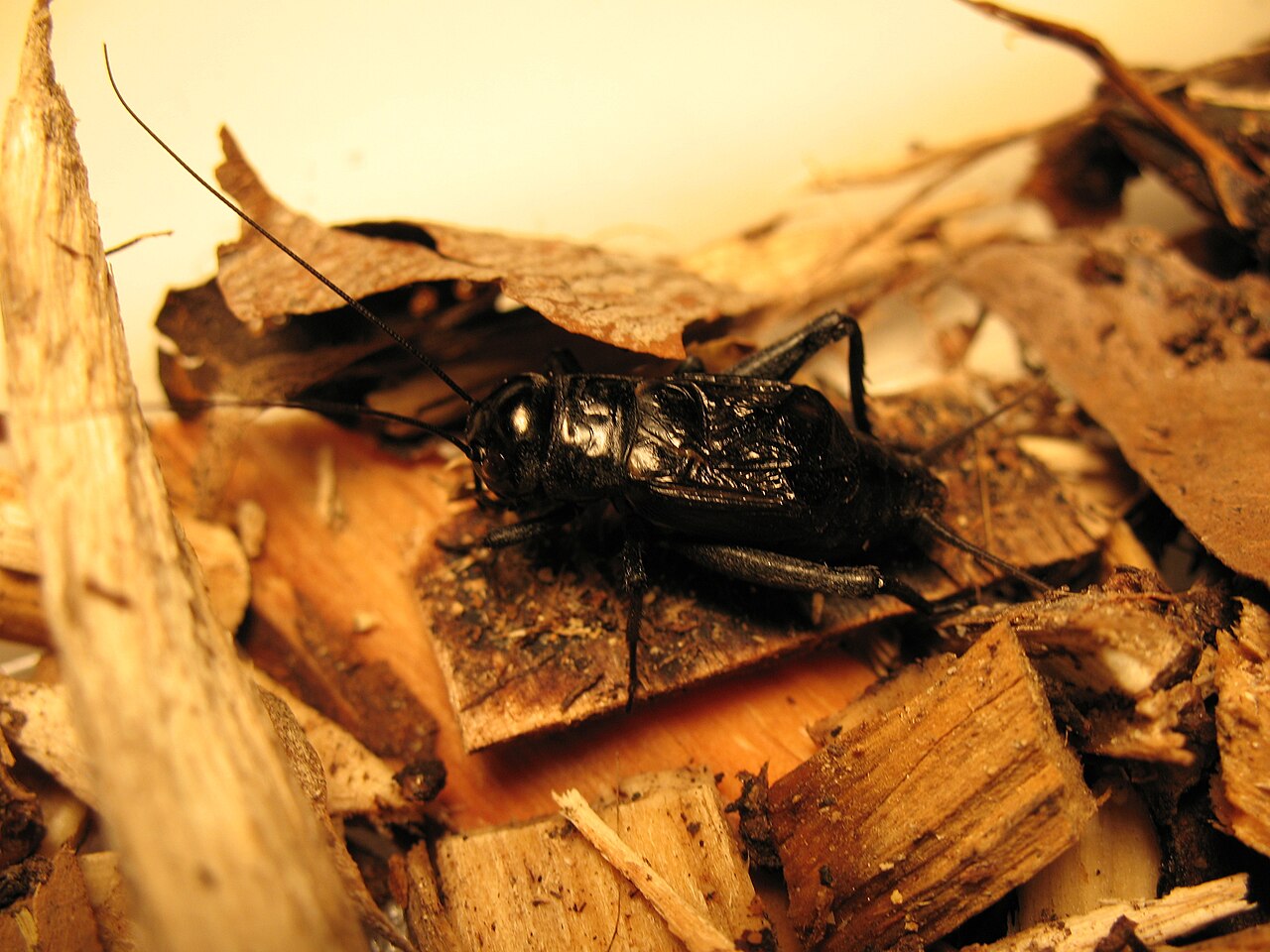
What crickets look like
Three different insects get called crickets in Delaware homes. They do not look alike, they do not live in the same places, and the treatment for one is close to useless against another. Identification comes first.
Field crickets (Gryllus spp.) are the ones most people picture: half an inch to an inch long, glossy black to very dark brown, with long thread-like antennae and wings folded flat across the back. Females carry a straight, needle-like ovipositor at the rear, used to place eggs in soil. It is not a stinger.
The house cricket (Acheta domesticus) is lighter — yellowish tan with three darker bands across the head — and runs about three quarters of an inch. It is the cricket sold as reptile feed, so escapees from a terrarium or a bag of feeder insects account for a share of indoor sightings.
Camel crickets, also called cave or spider crickets (Ceuthophilus spp.), look like nothing else in the house. Humpbacked, tan to mottled brown, completely wingless, with hind legs and antennae wildly out of proportion to the body. An adult can span an inch and a half with the legs extended. They jump toward disturbance rather than away from it, which reads as aggression. It is not; they see poorly and jump blind.
Camel crickets do not chirp. Chirping is produced by rubbing the forewings together, and camel crickets have no wings at all. If something is singing in the basement at night, it is a field or house cricket. The humpbacked one on the crawlspace wall is silent.
How they get in
Crickets are accidental invaders. Nothing indoors is a required part of their life cycle, so every one you find walked, jumped or was carried across a gap that should have been closed.
Field and house crickets follow foundation lines at night and enter at the obvious weak points: worn door sweeps, garage doors that no longer seat against the slab, gaps around hose bibs and dryer vents, unscreened crawlspace vents. Porch and security lighting draws them in from lawns and mulch by the dozen on warm nights, and they work along the wall until they find an opening.
Camel crickets take a different route. They already live in the crawlspace, drawn to the constant damp and darkness under the house, and move up through utility penetrations, sump pits, floor drains and unsealed hatches. Older crawlspace foundations around Camden and Wyoming with bare soil and no vapor barrier support a standing population indefinitely, unnoticed until they start appearing on the basement steps.
Moisture is the common thread. Leaf litter against the siding, mulch piled above the foundation line, firewood stacked on the ground and downspouts discharging at the wall all create damp harborage within a few feet of the house.
What they do
Crickets do not bite in any way worth worrying about, do not transmit disease, and do not damage structural wood. They are a nuisance pest with two real costs: noise and surface damage to stored goods.
The noise is not trivial. One male behind a baseboard or under a stair tread carries through a whole floor and will call for weeks. He stops when you enter the room and resumes once you settle, which is why they are so hard to locate.
The damage is to soft goods. Crickets chew natural and blended fabric — cotton, linen, silk and wool — and go hardest at anything soiled with perspiration, food or body oil. Paper, cardboard and book bindings are also fair game. It shows as irregular surface grazing rather than clean holes, concentrated on items stored flat in damp basements. Camel crickets add fungus and mold to the diet, one reason they thrive in a wet crawlspace.
A heavy cricket population also feeds other things. Steady numbers in a basement will support spiders and centipedes, and solving the cricket problem often resolves those complaints as well.
When you see them in Delaware
Field crickets overwinter as eggs in soil. Nymphs hatch in late spring, feed through summer, and reach adult size in August. That is why calls climb from late August through October — the population peaks just as nights cool and the whole cohort presses toward the warm side of the foundation.
Hard frost, usually somewhere in November across Kent County, ends the outdoor adults. Anything already inside a heated home persists for weeks afterward, which explains the lone chirping cricket in December.
Camel crickets follow a different calendar. Crawlspaces buffer temperature, so they hold populations year-round and turn up in January as readily as July. Numbers swell during extended wet spells, and a spring thaw that floods a crawlspace pushes them up into finished space within days.
Field crickets vs camel crickets
This is the confusion that matters, because it decides where the work happens. Get it wrong and you treat a lawn perimeter for an insect that has been living under the floor all along.
- Wings and sound. Field crickets have flat wings over the back and chirp. Camel crickets have no wings and make no sound whatsoever.
- Shape. Field crickets are flat-backed and cylindrical. Camel crickets are strongly humpbacked with an arched profile.
- Color. Field crickets are glossy black or dark brown. Camel crickets are tan or mottled light brown, often faintly banded on the legs.
- Where you find them. Field crickets appear near doors, garages and lit entryways. Camel crickets appear in crawlspaces, basement corners, window wells and under stored boxes.
- Season. Field crickets surge in late summer and die off after frost. Camel crickets turn up all year.
One practical consequence: camel crickets rarely enter dry, well-ventilated space. If they are in a finished basement, the crawlspace or slab edge is holding water, and correcting that does more than any spray.
How to keep them out
Exclusion and moisture control carry this pest. Crickets are large-bodied and slow, which makes them one of the easier insects to physically shut out.
- Fit tight door sweeps on every exterior door, including the garage, and replace them when the rubber curls.
- Seal foundation cracks and the gaps around hose bibs, cable entries and dryer vents.
- Screen crawlspace vents and keep the crawlspace hatch gasketed and latched.
- Pull mulch, leaf litter and firewood back from the siding, leaving a dry band against the foundation.
- Extend downspouts away from the wall and correct grading that lets water pool at the slab edge.
- Run a dehumidifier in the basement and lay a sealed vapor barrier over bare crawlspace soil.
- Store fabric and paper in sealed hard-sided bins rather than cardboard boxes.
- Switch porch fixtures to warm or amber bulbs and move bright security lighting onto a pole aimed back at the house.
How we treat crickets
We start with an inspection, inside and out, and confirm which cricket we are dealing with before anything is applied. That means checking the crawlspace and sill line, not only the rooms where they have been seen.
Inspection and identification
Sightings are logged by location and date, moisture sources identified, and entry points along the foundation mapped. Sticky monitors in basement corners, along crawlspace piers and behind appliances show within a week or two where the population lives and which way it is moving.
Targeted treatment and follow-up
Treatment under integrated pest management is narrow by design. A perimeter application at the foundation and around entry points intercepts field and house crickets on their way in. Crawlspace and void work handles camel crickets where they harbor. Interior applications are limited to cracks, crevices and voids rather than broadcast over living space, and are paired with the exclusion work above so the population has nowhere to resupply from.
We re-monitor afterward to confirm the count is falling, and adjust if it is not. Where the underlying issue is a wet crawlspace or a failing grade, we say so — pest work alone will not hold a line that water keeps reopening. Crickets are usually handled within routine general pest control service; to have the basement looked at, contact us.
Crickets FAQs
Do camel crickets chirp?
No. Camel crickets are completely wingless, and chirping is made by rubbing the forewings together. Any chirping you hear is a field cricket or a house cricket. Camel crickets are silent, which is why people are surprised to find so many of them.
Are crickets in the house dangerous?
Not really. Crickets do not transmit disease, do not damage structural wood, and their bite is not a practical concern for people. The real costs are noise from chirping males and surface chewing on fabric, paper and cardboard in damp storage areas.
Why do I have so many crickets in my basement?
Almost always moisture. Camel crickets need constant damp and darkness, so a crawlspace with bare soil, a leaking foundation or a humid basement will hold a permanent population. Drying the space out reduces numbers more reliably than any spray.
Do crickets bite people?
Large field crickets can pinch if you hold one, but they do not seek out people, they do not feed on blood, and bites are not a medical issue. The needle-like structure on a female cricket is an egg-laying organ, not a stinger.
What time of year are crickets worst in Delaware?
Late August through October. Field crickets reach adult size in late summer and press toward warm foundations as nights cool, so that is when indoor sightings peak. Camel crickets in crawlspaces can be found in any month.
How do I find a chirping cricket in my house?
Chirping males stop calling when they sense movement and resume once the room is still, so tracking one by ear takes patience. Sticky monitors placed along baseboards, behind appliances and near basement corners will usually locate them faster than searching.
Will crickets damage my clothes?
They can. Crickets graze on cotton, linen, silk and wool, and they go hardest at fabric soiled with perspiration or food. The damage looks like irregular surface grazing rather than clean holes, and it concentrates on items stored flat in damp basements.
Where we treat
Crickets control across Delaware
- Claymont, DE
- Hockessin, DE
- Wilmington, DE
- Newark, DE
- New Castle, DE
- Bear, DE
- Delaware City, DE
- Odessa, DE
- Middletown, DE
- Townsend, DE
- Smyrna, DE
- Clayton, DE
- Kenton, DE
- Cheswold, DE
- Hartly, DE
- Little Creek, DE
- Dover, DE
- Wyoming, DE
- Camden, DE
- Marydel, DE
- Magnolia, DE
- Viola, DE
- Frederica, DE
- Felton, DE
- Harrington, DE
- Milford, DE
- Houston, DE
- Lincoln, DE
- Greenwood, DE
- Ellendale, DE
- Bridgeville, DE
- Seaford, DE
- Bethel, DE
- Laurel, DE
- Delmar, DE
Get on the schedule
Dealing with crickets?
Send a photo and a few details. Correct identification is free and it changes the treatment.